How to Upload Photos From My Jitterbug Samsung Phone to Computer
How to back upwards to Google Photos from a phone, tablet, or computer

It's easy to take thousands of photos with a smartphone and digital camera, and it's difficult to imagine losing fifty-fifty i. Each represents a retentivity that can't easily be replaced or recreated, then it's important to make sure every image is safe, no affair what happens to your devices.
Better cameras mean higher-quality pictures, which means more infinite is required to shop them. CDs, USB sticks, and external difficult drives accept fallen out of fashion considering they can't hold all files in a fourth dimension-efficient, affordable way: instead, they've been surpassed by the all-time cloud storage services.
There'south no better selection than backing up photos with cloud storage. Whereas a concrete difficult drive tin can fail or get corrupted, cloud storage servers are incredibly well maintained, and kept safe from malicious attackers. It's also cheap and scalable—most services allow y'all to upgrade instantly if you need more storage.
Best of all, when photos are uploaded, you tin admission them from any device whenever you desire to look dorsum at your memories. Google Photos is amid the best deject storage for photos, and comes preloaded with almost Google and Android devices, but you tin can use it from an iPhone or a Windows computer besides.
Information technology as well includes a range of features for organizing photos, and so that y'all tin easily notice a specific image when you lot want information technology. We'll walk you through the process for uploading images from your smartphone, tablet, and computer; explain how to make a backup of your library; and how to sort images for easy retrieval later.
Google Photos: Storage options and upload limits
Earlier you start bankroll up images to Google Photos, it's important to empathise the difference between loftier and original quality backups. When you select high quality fill-in, Google will compress images slightly before transferring them. If you're uploading from a smartphone, y'all likely won't discover any drop in prototype quality. Google's compression is very efficient, peculiarly for JPG image files.
The advantage is that these backups are completely free. They don't count towards the 15GB of gratuitous cloud storage y'all get with a Google business relationship, and so you lot can shop as many images as you want. Note that Photos also accepts videos, and high quality uploads are stored in 1080p, which is already the maximum resolution at which many cameras are capable of recording.
If y'all're shooting with a DSLR or thinking about press photos, though, y'all might not want any compression. In that instance, select original quality, which will upload the full-size prototype. Keep in listen that you lot can back up RAW prototype files, just check Google's support documentation to encounter what types of RAW files are supported.
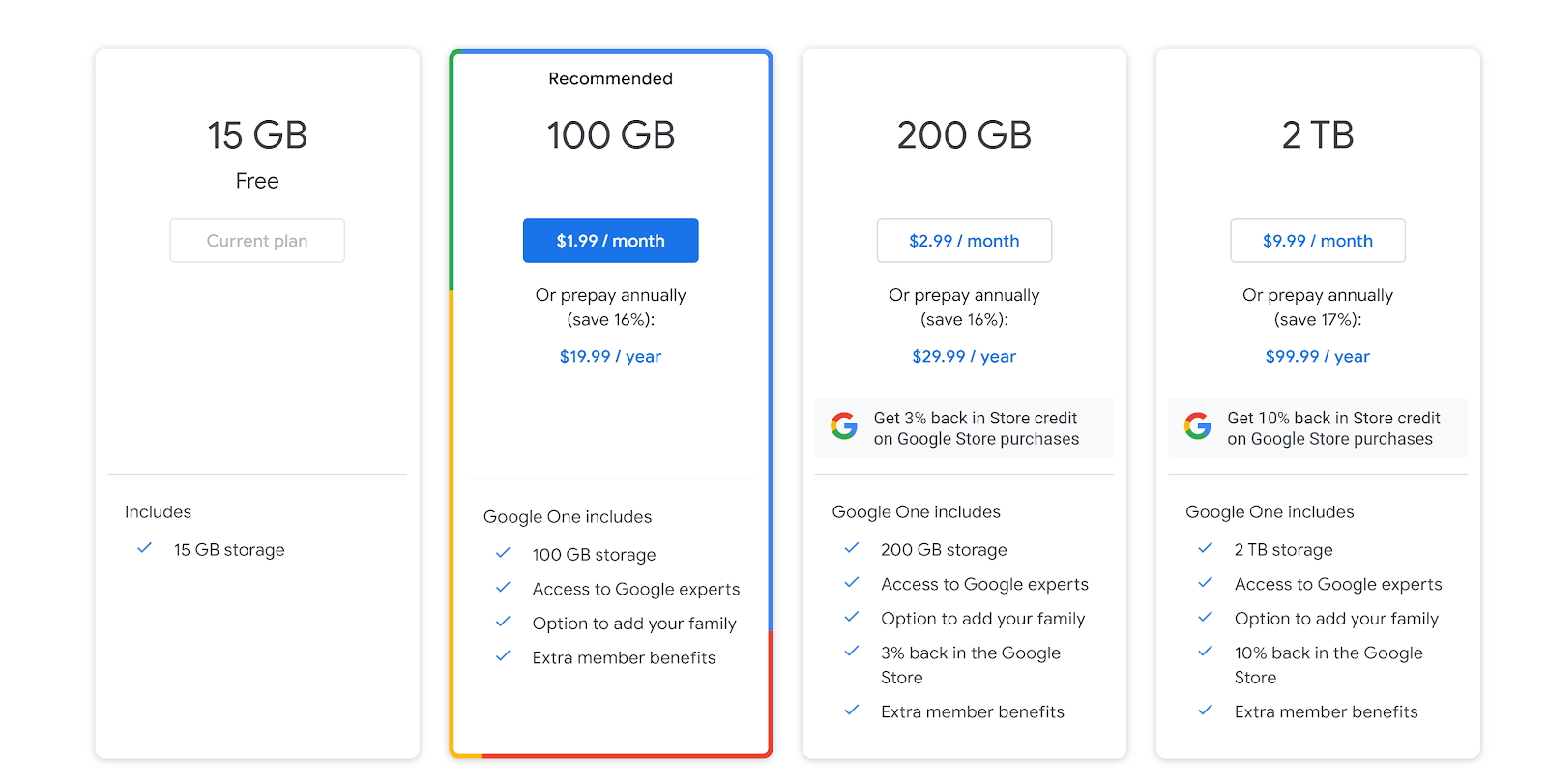
Original quality photos and videos do count confronting your 15GB limit, and remember that this limit is shared amid all Google services, from Photos to Drive and Gmail. If you need more than Google Cloud storage, you can sign up for a Google One subscription. There are iii plans providing 100GB, 200GB, and 2TB of data respectively, and for each, paying annually saves you 16%
The 100GB plan costs $1.99 a month, or $11.99 a yr. 200GB costs just fractionally more at $2.99 a month, or $29.99 a year. The 2TB program will set you lot back merely $9.99 (or $99.99 for the year). Benefits include the ability to share data with family members, priority customer support, and discounts on items purchased from the Google Store (three% for the 200GB program and x% for the 2TB programme).
Google Photos: How to back up photos from a phone or tablet

Uploading images from an iOS or Android smartphone or tablet is incredibly piece of cake. To get started, just download the Google Photos app from Google Play or the Apple tree App Store for gratis. One time it's installed, log in with your Google business relationship. If any photos were previously tied to your account, they should appear automatically.
When you starting time sign in, you can decide whether to back up original or high quality images, as well as whether to enable uploads when your device isn't connected to Wi-Fi. We recommend but allowing uploads on Wi-Fi (the default selection) since uploads can quickly chew through your mobile data program.
Nonetheless, if your mobile plan provides large amounts of data, you can override this and upload photos and videos on Wi-Fi and mobile networks. Users tin also implement dissimilar settings for photo and video uploads. For example, y'all tin can upload photos over Wi-Fi and mobile data, but preclude videos from uploading until yous connect to Wi-Fi.
When you first launch the app, it will ask you to turn on automated backup and syncing too. Because yous're reading this article, we'll presume y'all want to practise this, so follow the on-screen prompts. You'll need to provide the app with permissions, such as access to your photograph library. If you lot previously didn't set up automated backup and sync, you lot can activate it past going to the account control screen.
Notably, Android devices have additional options, including the ability to select specific image folders that you want to backup. This is especially useful if you only want to sync your camera roll.
1 of the best things about Google Photos is that you can utilize it to free up infinite on your device. In Settings, select "Manage device storage". The "Gratis up space" selection will automatically delete any photos from your device that it has already backed up.
One time you've made your upload decisions, click "Confirm", and your photos will brainstorm uploading. After some time, your photos will exist securely bachelor from whatsoever device connected to your account. Preparing to back up to Google Photos on a tablet is similar: offset download the app, and once launched, the process for setting up backup and syncing is much the aforementioned.
Google Photos: How to back up to photos from a PC or Mac
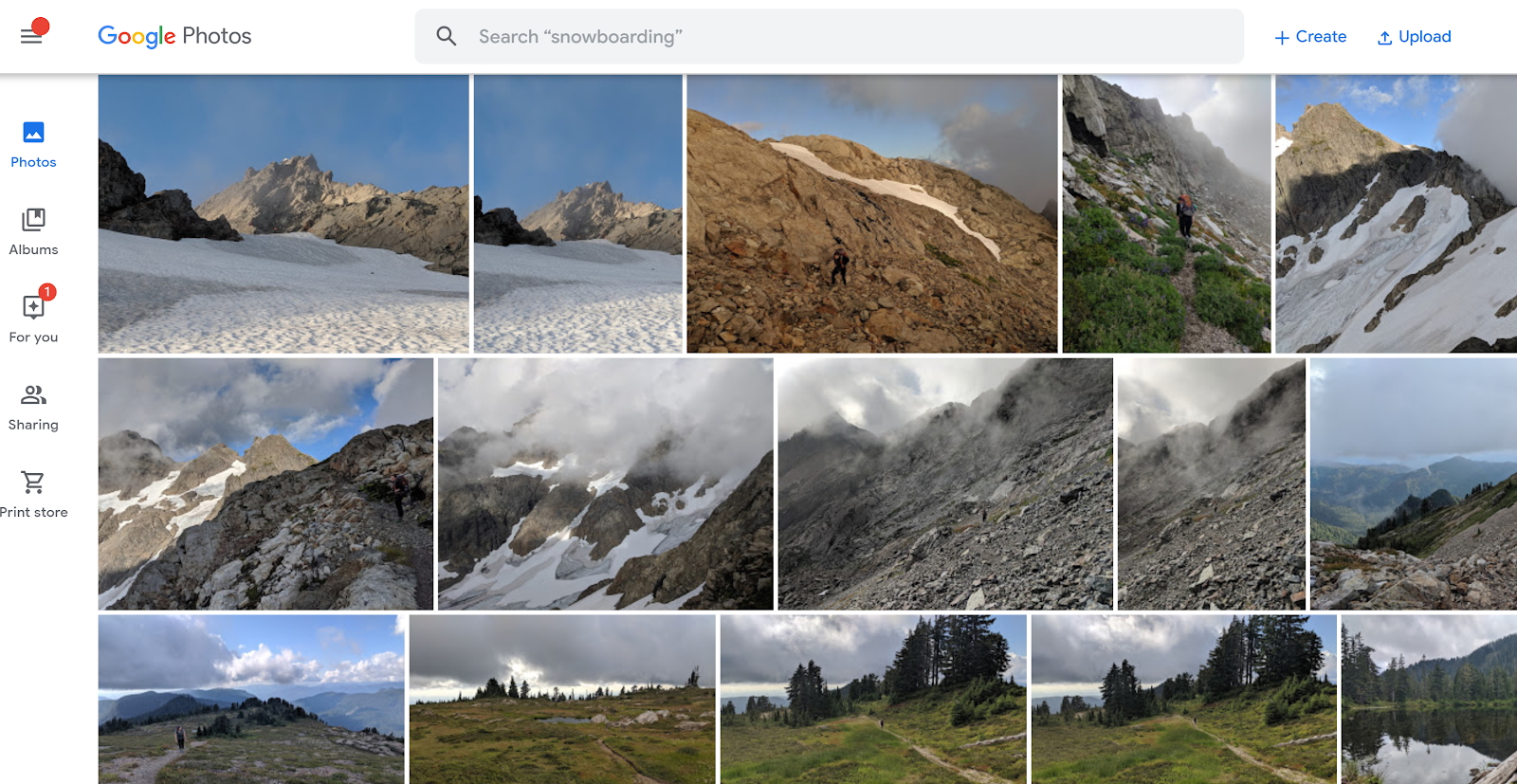
Google Photos also enables you lot to support photos from your desktop or an external difficult drive. The easiest mode to do this for one-time transfers is to use the Google Photos browser interface. Sign in, select "Upload", and then choose what photos you want to copy to the deject.
Uploading multimedia from your computer is a slightly different procedure than for phones and tablets. If you're using a Windows 10 device, the offset thing you'll need to do is download the Google Photos client. If you want automatic backups to ensure all photos are synced, y'all'll need Google'south Backup & Sync desktop app.
Install the software, and and then select which folders y'all want to sync. If y'all desire to upload files from an external hard drive or SD menu, those will need to be continued to your computer to select for backup within the app. Afterward logging in, proceed to the side by side step, where you'll be prompted to prepare up automatic backup and sync.
At this step, you'll need to choose whether to upload photos and videos simply, or all file types. The app isn't limited to uploading photos, but any image and video files will automatically exist sent to Google Photos. Choosing all types will outcome in data being uploaded to Google Drive every bit well as Photos. This is ideal if yous want to fill-in your entire device.
However, if yous desire to solely focus on photos and videos, choose the first pick. Going forrad, the app will run in the background, and initiate uploads someday y'all add new files to your synced folders.
Yous'll demand to select the folders and drives that will be uploaded. At this stage, you'll also need to select the resolution you'd like to upload photos at, just every bit with phone and tablet setup. Afterwards you complete the two previous steps, all that'south left to do is click "Confirm", ensure your computer is connected to Wi-Fi, and wait.
Depending on connectedness speed and the size of your library, this may have several hours. Nevertheless, once the initial upload is consummate, you'll take seamless access to your photos across your devices.
Google Photos: How to upload photos from Google Drive
Until mid-2019, there was no distinction betwixt Google Photos and Google Drive. If yous uploaded photos to one service, they were automatically copied over to the other. However, that joint direction system has been modified to prevent users from accidentally deleting photos.
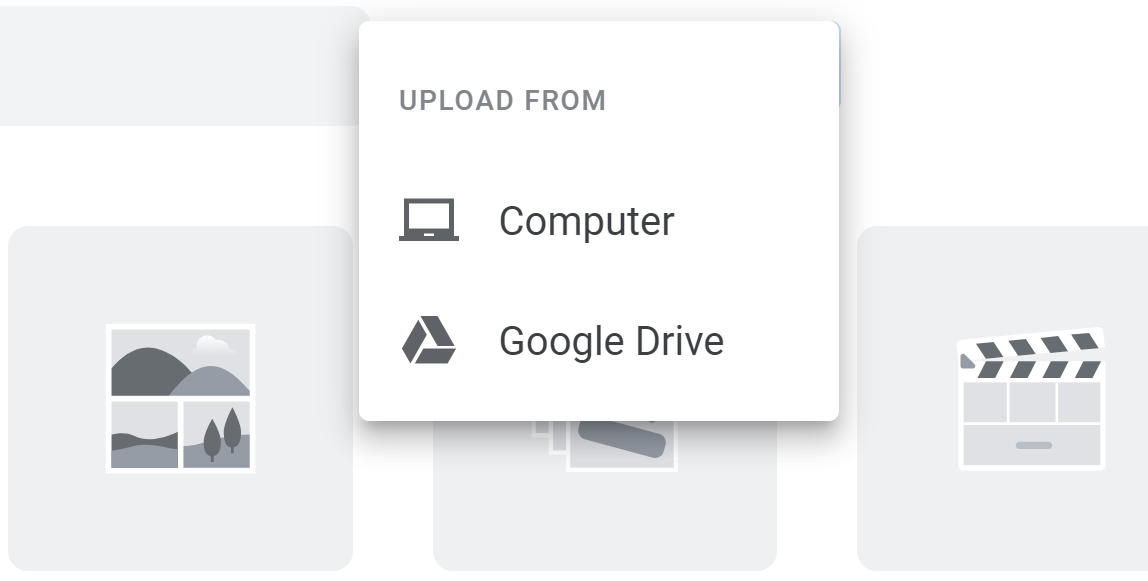
At present, photos uploaded to Bulldoze won't automatically prove up in Photos, and vice versa. If you want to re-create images from Drive to Photos, you'll need to do it manually. In the Photos web interface, find the "Upload" push in the upper right corner and select "Upload from Google Bulldoze".
You can then choose which images you would like to copy, and whether to upload them in original or high quality. Since the photos are already in the cloud, the transfer is nearly instantaneous. Once your images are copied over, you lot have the option of deleting them in Drive to help free upwards storage.
Note that this is true even for images that were uploaded prior to 2019—when Google separated Drive and Photos, it applied the management change to all images in your cloud account. Of course, information technology's a good idea to double check that images are sitting safely in Photos before you delete copies from Bulldoze.
Google Photos: How to dorsum up analogue prints
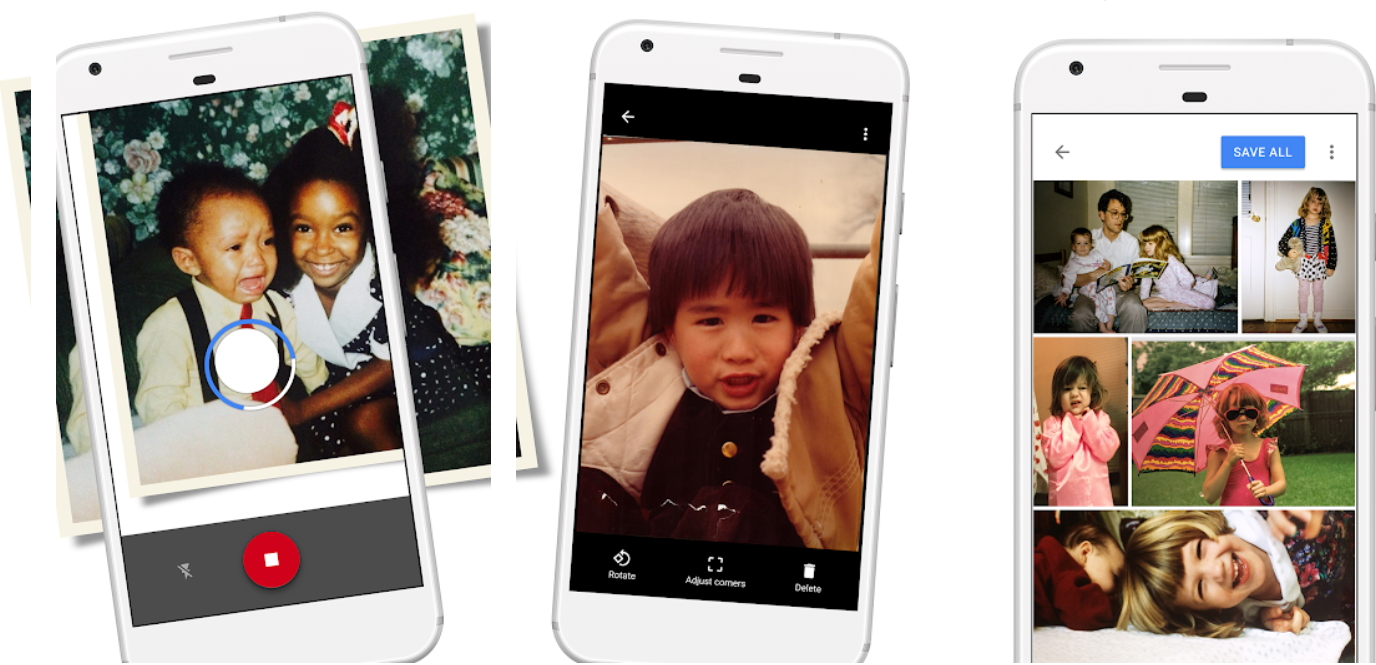
If you accept reams of old 4x6 prints sitting effectually your firm, Google can help you digitize so back them up. Download the Google PhotoScan app for iOS or Android to start scanning your photos one by one.
The smashing thing virtually the app is that it can eliminate the bright spots that normally announced when y'all try to accept a photo of a glossy impress. The app requests four scans of each photo from different angles, then stitches those scans together to give you a perfectly digitized rendering. Every photo you scan will be automatically uploaded to Photos for storage.
Of course, you lot tin can also use another photo scanning app or physical scanner to digitize your photos. If yous go this route, you tin upload your images to Photos from your smartphone or computer as described above.
Google Photos: How to manage and organise your photos
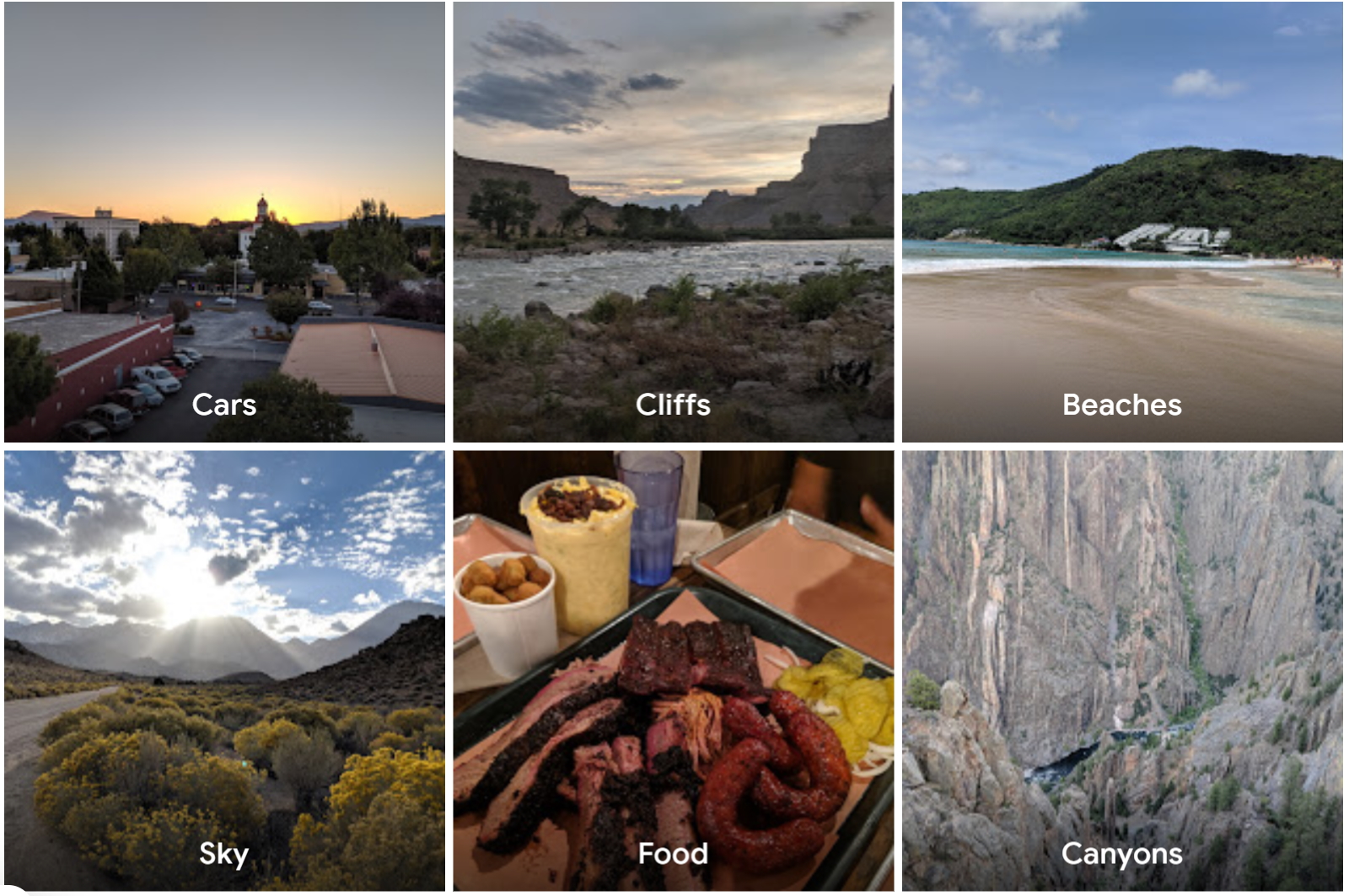
Later on uploading images from all your devices and some of your sometime sleeky prints, y'all likely at present accept a small mountain of images to sort through in the cloud. Thankfully, Google Photos offers plenty of options for organizing photos.
The simplest matter you can do to sort photos is to create albums. Google makes information technology piece of cake to select any number of images and grouping them into a new album, or add them to an existing album. Navigate to the "Albums" section of the mobile app or web interface to create a new album, then select which images you want to add to it with but a tap or click.
It's worth noting that yous can't create albums inside of albums, so think carefully about a naming scheme that volition help you stay organized. You lot also can't tag photos, although you can add individual descriptions. Any text in these descriptions is searched when yous enter terms in the search bar.
Once you accept an album ready, you can easily share it with anyone. If your friends and family have Google accounts, they can comment on photos. You tin as well invite them to add their ain images to an anthology, which is a groovy choice for sharing everyone'due south images from a trip or event. Photos others add to an album yous shared don't count against your storage limits, unless you save copies to your account.
Of course, this is a Google platform, so information technology involves some magic in the form of machine learning. Google automatically scans every image you upload, and detects faces and objects (for improve or worse, you surrender some privacy when you use Google services).
It won't automatically connect a name to a face, even if that person has a Google account, but you can tag someone, and it will apply that tag across all images where the aforementioned person appears. Then, if you search for a name or specific object, Photos will automatically show all images with that person or object in them.
Machine learning can likewise assistance categorize images into albums. Your photo library is automatically sorted into People & Pets, Things, and Places, then into hundreds of categories like Mountains, Cooking, Dogs, Boats, and more than.
It'southward uncanny how good Google is at doing this, and information technology tin be pretty cracking to explore these categories, since they bring together photos from different times in your life. Yous can as well ameliorate Google's image categorization by giving feedback on whether your images were identified correctly.
Google Photos: How to edit your photos
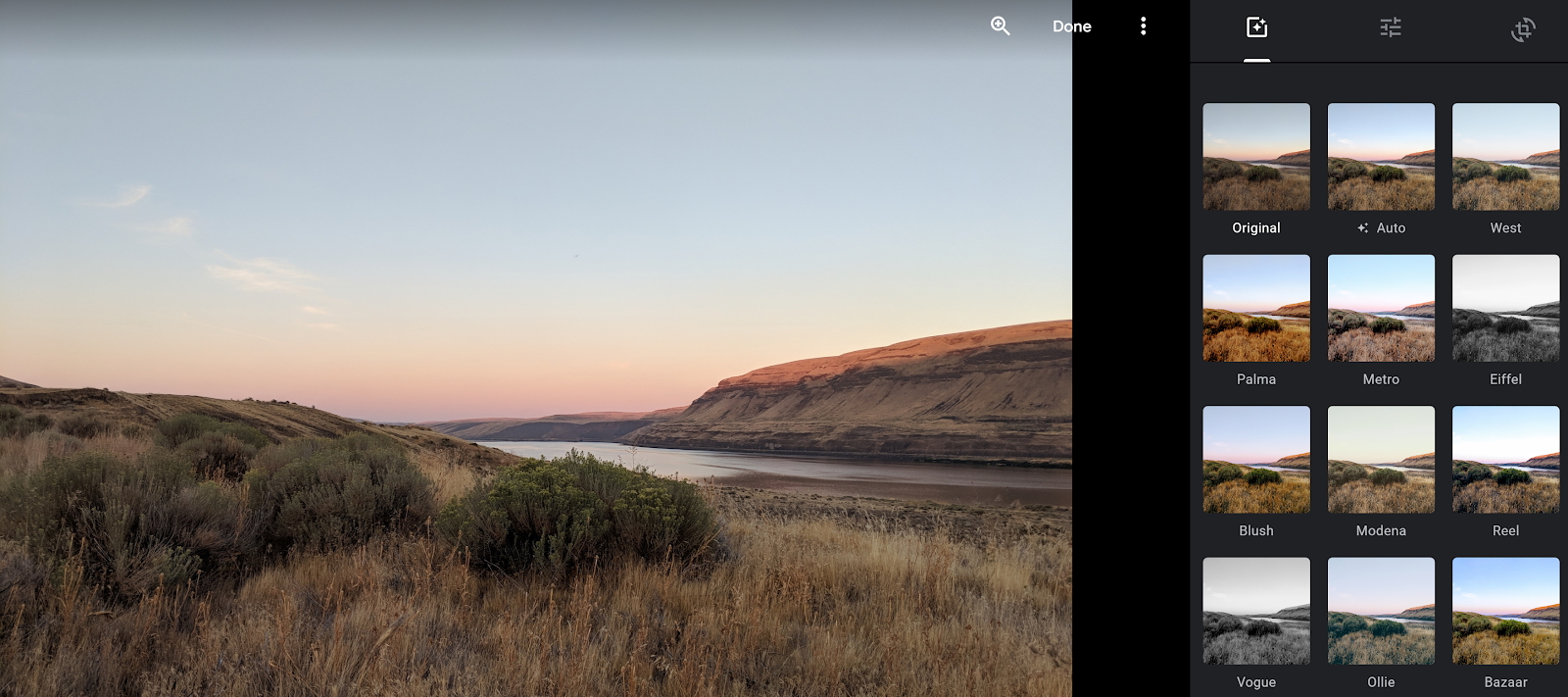
Ane of the just major features missing is a capable epitome editor. Whether using the app or the browser interface, y'all can simply make bones affect-ups and crops. Inside Google Photos, open whatever image and click or tap the sliders icon.
You'll see a few options for adjusting the lighting, colour, and popular of your prototype, every bit well equally a uncomplicated pen tool for marking upward images. Yous tin also choose to utilize any of effectually a dozen filters, or use the "Machine" function to have Google automatically suit your image for you.
These options are far from comprehensive, but they're proficient for making quick improvements to images on the go. Some other inclusion is the "For you" tab, where you'll find already edited and stylized versions of some of your recent photos. If you like the edits that the algorithm fabricated, y'all tin keep changes or even order prints.
How to dorsum up your Google Photos library to a hard drive
Google Photos is a highly secure option for storing photos in the cloud. Just with files that are impossible to replace, information technology's a expert idea to proceed at least two complete backups. Photos serves as one of these backups, and creating a hard copy of your library on a physical hard drive can serve as another.
Before nosotros dive into how to create a backup, it's important to empathize one major catch: in that location's no simple way to go along your physical fill-in automatically synced with your Google Photos library. That ways it's important to occasionally add all the photos you've uploaded since your concluding backup to your concrete drive.
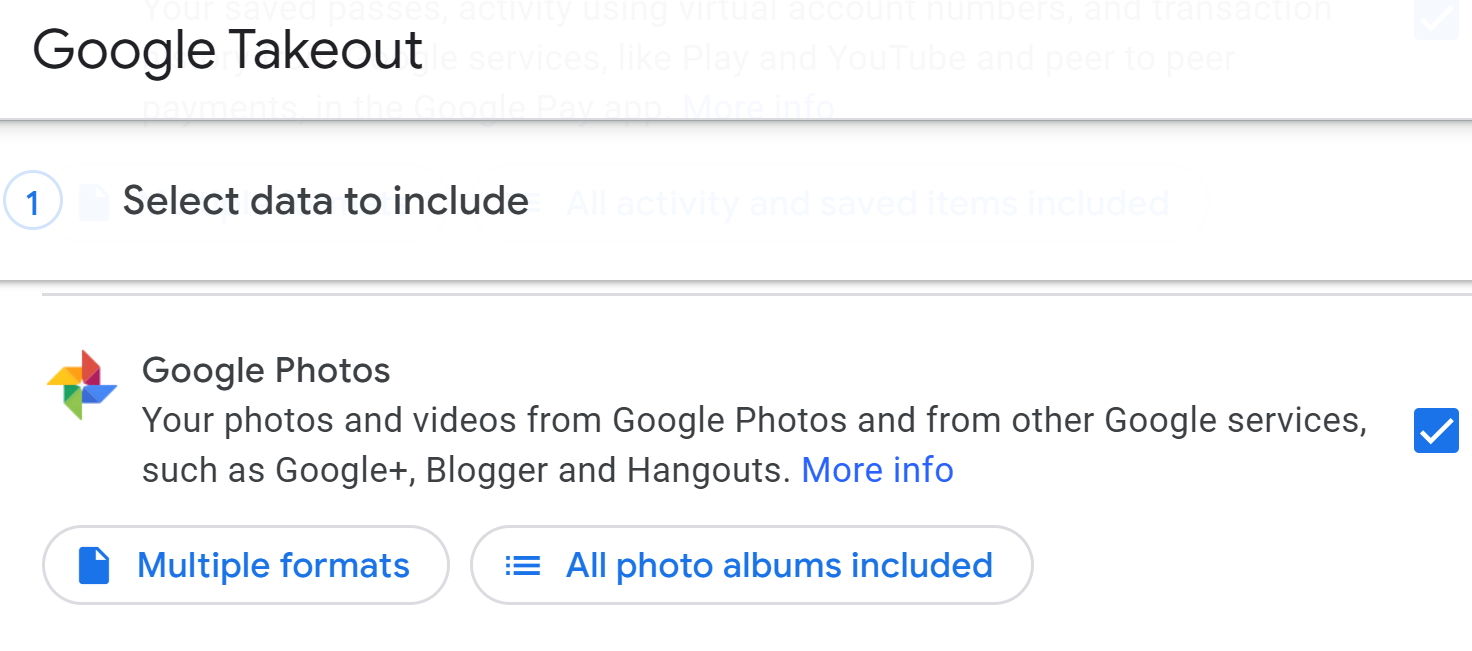
To download some or all of the images in your Photos library, you lot'll need to use Google Takeout. You lot tin access this directly or navigate inside Google Photos to Settings > Manage your data and personalization > Download your information. Click "Deselect all" (unless you want to dorsum up other data from your Google account, not only photos) and then select "Google Photos".
This will automatically export your entire photo library. If you just need to support a subset of your library, uncheck the "All Photo Albums Included" box, and then deselect any albums y'all don't want to download.
Before your download begins, you'll need to decide on a couple of options. You tin send photos direct to another service, or get an email download link. You can also modify pinch settings and cull the maximum size for each download. If your library is larger than the maximum size y'all select, you volition receive multiple download links.
Notation that Google also lets you schedule automated, recurring data exports. But, if you choose this selection, you won't merely get download links for the new photos y'all've added to your library in the meantime—Google will export your unabridged photo library each fourth dimension.
Once you begin the consign, Google Takeout volition create a downloadable copy of all the files y'all selected. If y'all take a large library, it may be several hours or more than before you receive a download link. Download the files to your difficult drive or an external drive to continue as a spare concrete backup.
Google Photos: Summary
Setting up automatic fill-in and syncing across all your devices will ensure seamless admission to your photo library across all your devices.
You can also now begin taking reward of Google Photos' fantabulous features, such as smart search capabilities that make it easy to sort photos past content blazon, location, or even the people captured in the image. This saves time, and ensures y'all can always pull up the perfect shot at the perfect moment.
Farther reading on cloud storage
Take a look at our cloud storage checklist, our five things to consider when selecting online storage, and our tips for businesses in data backup and recovery.
leachmanweepleget.blogspot.com
Source: https://www.tomsguide.com/best-picks/google-photos-how-to-back-up-photos-from-your-phone-tablet-or-computer
0 Response to "How to Upload Photos From My Jitterbug Samsung Phone to Computer"
Post a Comment